· Gyaan Abhiyan Team · Current Affairs · Politics & Governance · 4 min read
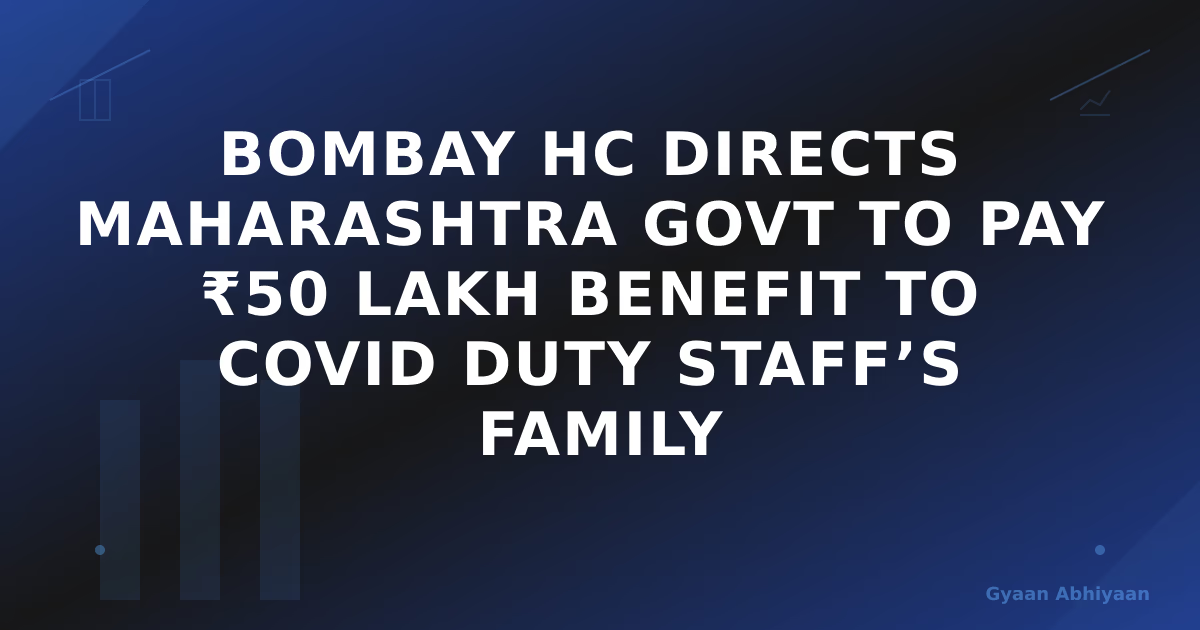
Bombay HC directs Maharashtra govt to pay ₹50 lakh benefit to COVID duty staff’s family
When families of frontline workers affected by COVID-19 seek compensation, understanding the criteria for eligibility becomes crucial. Recently, a significant...
Why in News?
"When families of frontline workers affected by COVID-19 seek compensation, understanding the criteria for eligibility becomes crucial. Recently, a significant legal ruling clarified how the timing of infection, rather than the date of death, determines entitlement to government insurance benefits. This decision highlights the importance of recognizing the sacrifices made by contractual employees during the pandemic and ensures that bureaucratic technicalities do not hinder rightful claims. For those researching government relief schemes related to COVID-19 fatalities, this case sets a vital precedent in Maharashtra's legal landscape."
When families of frontline workers affected by COVID-19 seek compensation, understanding the criteria for eligibility becomes crucial. Recently, a significant legal ruling clarified how the timing of infection, rather than the date of death, determines entitlement to government insurance benefits. This decision highlights the importance of recognizing the sacrifices made by contractual employees during the pandemic and ensures that bureaucratic technicalities do not hinder rightful claims. For those researching government relief schemes related to COVID-19 fatalities, this case sets a vital precedent in Maharashtra’s legal landscape.
Reevaluating Eligibility: Infection Date Over Death Date
On December 23, 2025, the Kolhapur Bench of the Bombay High Court issued a landmark directive to the Maharashtra government, mandating the disbursement of a ₹50 lakh ex gratia insurance to the family of a contractual data entry operator who succumbed to COVID-19 after serving during the pandemic.The court emphasized that the critical factor for eligibility under the scheme is the date when the infection was contracted, not the date of death. This ruling overturned a previous decision by the Public Health Department that had denied the claim based on the scheme’s operational cutoff date of June 30, 2021.
Contractual Employees and the Scope of the Scheme
The deceased, Sarita Patil, was employed on a contractual basis at a Primary Health Centre under the national Rural Health Mission. Despite her contractual status, the court recognized that the hardships endured by her family are no less significant than those of permanent employees. The judges criticized the State’s exclusion of contractual workers from the benefit, stating that such a narrow interpretation undermines the scheme’s humanitarian intent. This perspective aligns with broader constitutional values of fairness and dignity,reinforcing that all COVID-19 frontline workers deserve equal recognition.
Legal Arguments and the court’s Reasoning
The petitioner’s counsel, N.B. Khaire, argued that since Sarita Patil contracted COVID-19 while performing official duties, the benefit should be granted regardless of her death occurring after the scheme’s deadline. conversely, the State’s representative, Assistant Government pleader Tejas J. Kapre, maintained that the scheme was a time-bound policy decision, justifying the rejection of claims filed post-june 30, 2021. The court, though, rejected this rigid stance, underscoring that the government resolutions dated May 29, 2020, and May 14, 2021, clearly prioritize the infection date for determining eligibility.
Humanitarian Considerations and Government Duty
The court’s judgment also highlighted the moral obligation of the State to support families who lost loved ones while combating the pandemic.It stressed that the financial assistance is more than a symbolic gesture; it provides essential relief to those who endured immense hardship. The ruling called for a compassionate approach, urging authorities to avoid procedural hurdles that could deny substantive justice. The court instructed the District Health Officer, Kolhapur, to facilitate the prompt release of the insurance amount within eight weeks.
Critically important Facts: Key Points to Remember
- The Kolhapur Bench of the Bombay High Court ruled on December 23, 2025, regarding COVID-19 insurance benefits.
- The case involved Sarita Patil, a contractual data entry operator who died on July 4, 2021, due to COVID-19.
- The court emphasized that the date of contracting COVID-19, not the date of death, determines eligibility for the ex gratia scheme.
- The insurance benefit amount ordered was ₹50 lakh.
- The scheme was initially operational until June 30, 2021, but the court ruled this cutoff should not exclude those infected before that date.
- Contractual employees are entitled to the benefit, as their service and sacrifice are equally valuable.
- The ruling referenced Government Resolutions dated May 29,2020,and May 14,2021.
- The court invoked constitutional principles of justice,fairness,and dignity in its decision.
- The Maharashtra Public Health Department was directed to process the claim within eight weeks.
- District Health Officer, Kolhapur, was tasked with assisting in the benefit disbursement.
Frequently Asked Questions
Q: who qualifies for the COVID-19 ex gratia insurance under this scheme? Any government or contractual employee who contracted COVID-19 while performing official duties and subsequently died is eligible, provided the infection occurred during the scheme’s operational period.
Q: Why is the date of infection more important than the date of death? The court ruled that the scheme’s intent is to compensate those infected during the designated period, regardless of when death occurs, ensuring fairness and honoring the sacrifice made during service.
Q: Are contractual employees included in the insurance benefit? Yes,the court explicitly stated that contractual workers should not be excluded,as their contributions and the impact on their families are equally significant.
Q: What was the original reason for denying the insurance claim? The state rejected the claim because the death occurred after the scheme’s cutoff date of June 30,2021,and because the employee was contractual,which the court later overruled.
Q: How soon must the government release the insurance amount following this ruling? The court directed the authorities to process and disburse the benefit within eight weeks, with assistance from the District Health Officer in Kolhapur.